What to do if stung by a jellyfish?
The right actions to take on the beach and once you're home.
On the beach
Rinse with seawater
Rinse the affected area with seawater. Warning: do not use fresh water! It bursts the stinging cells and worsens the burn.
Apply sand
Apply sand, flour, or shaving cream on the affected area.
Remove jellyfish debris
Gently scrape with a rigid card (postcard, bus pass…) without rubbing to remove jellyfish debris.
Rinse again
Rinse the area again with seawater.
Lifeguard station
Go to the nearest lifeguard station if possible.
What NOT to do
Do NOT rinse with fresh water (it bursts the stinging cells)
Do NOT rub the affected area
Do NOT apply vinegar (except for Portuguese man-of-war)
Do NOT urinate on the sting
When to see a doctor
Severe allergic reaction (difficulty breathing, facial swelling)
Extensive sting or on face/eyes
Intense pain that doesn't subside after 30 minutes
Faintness, nausea, or loss of consciousness
Once you're home
Wash with vinegar
Wash the area with vinegar (apple cider vinegar ideally). It may sting, but effectively removes small stinging cells left on the skin.
Apply heat
If pain persists, hot water can help as the venom degrades with heat. Stay in for about 30 minutes.
About jellyfish stings
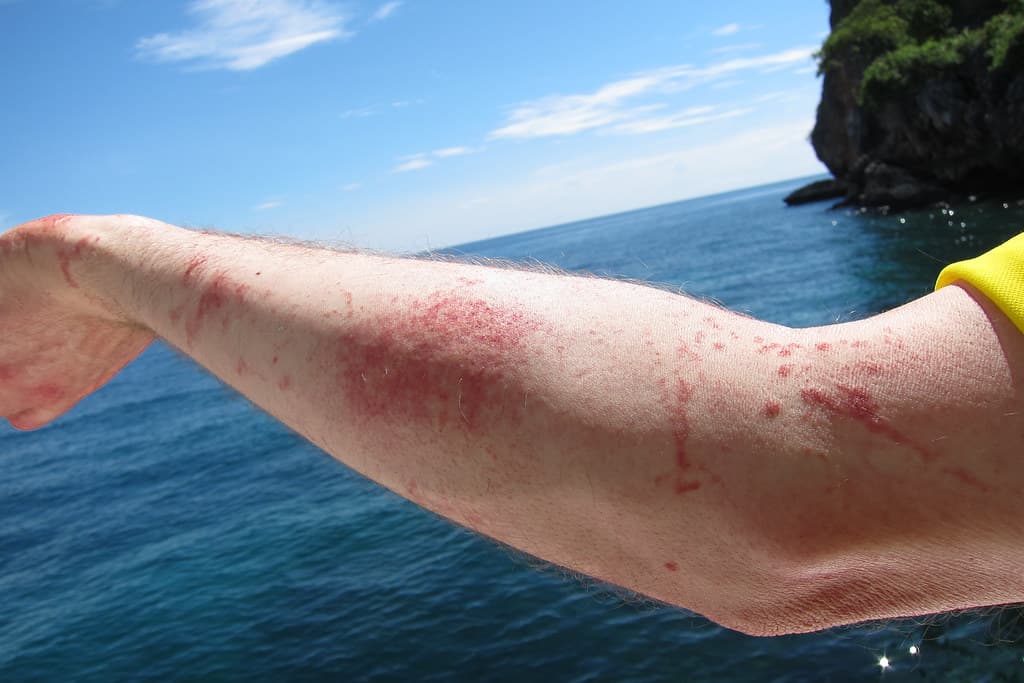
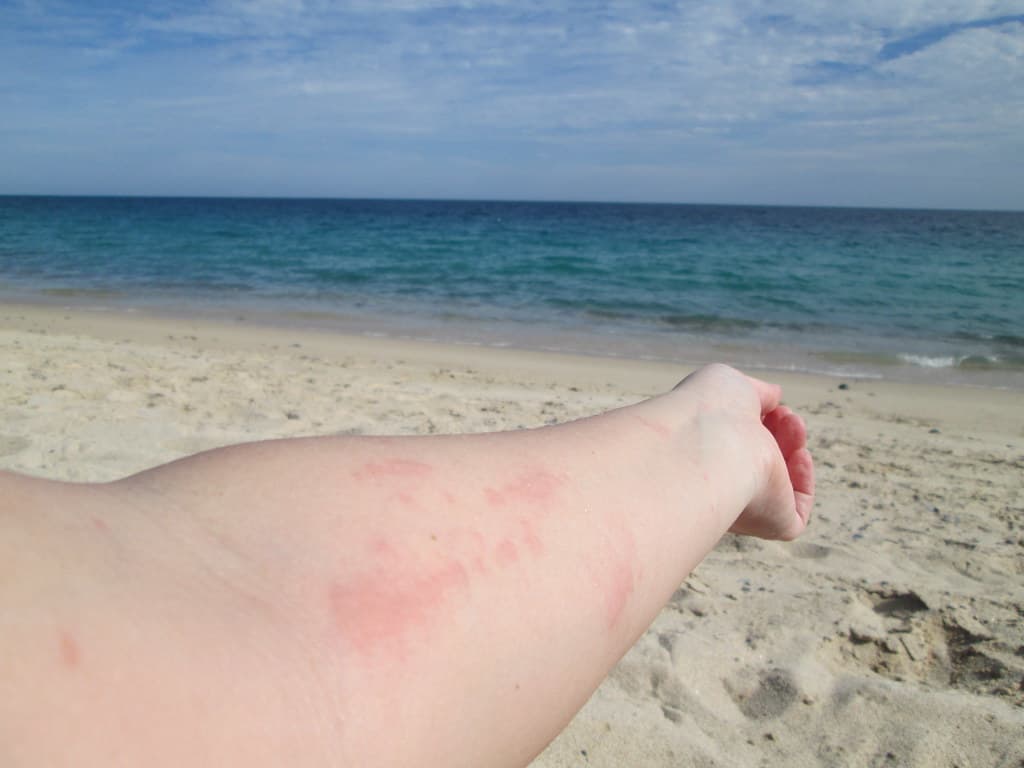
Jellyfish have stinging filaments at the tips of their tentacles that release venomous liquid upon contact. The pain is similar to an electric shock, followed immediately by a burning sensation of varying intensity depending on the person and species, then itching.
Discover species
Découvrez les espèces de votre région et apprenez à les identifier avant de vous baigner.
Species Atlas